THE FUTURE OF FARMING IS

Let’s work together.

This tool is for

Everyone, who:

  • Wants to make the future of farming more just and sustainable.
  • Is fighting for better working conditions for everyone in agriculture.
  • Cares about the future of rural territories and small-scale farming.
  • Is working to remove the barriers fair fair land access.
  • Wants to better understand the day-to-day realities faced by farmers especially women* across Europe.

How this tool

helps you:

  • Break down policy: Get a clearer picture of the key issues in agriculture today.
  • See the big picture: Make visible the realities and possibilities of a just transformation in EU agriculture.
  • Uncover the root causes: Identify the structural problems that keep the system from changing.
  • Find what works: Learn from examples and strategies that are already making a difference and hold hope.
  • Make informed decisions: Give social movements, NGOs, researchers, and policymakers the evidence needed to drive real change.

WHO WE ARE

About SWIFT
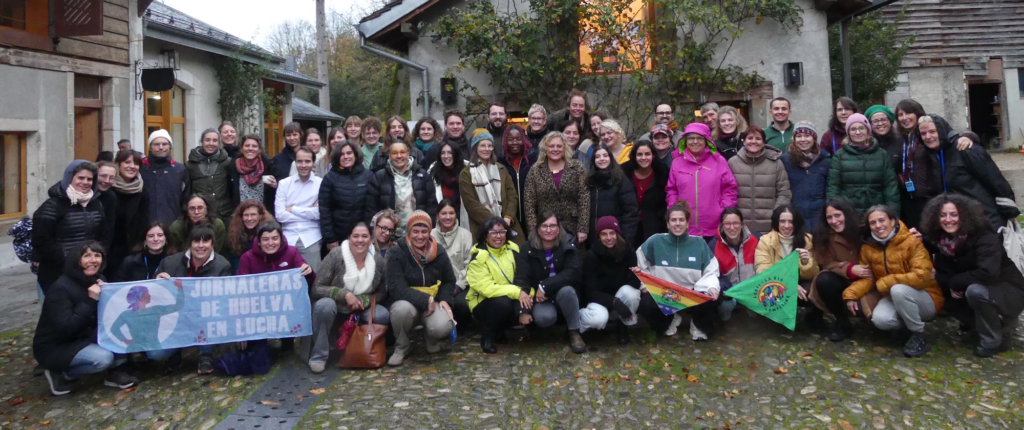
We are a network of scholars, farmers, movements, and practitioners dedicated to secure more equitable farming futures. This network consolidated around the EU-funded SWIFT Project. SWIFT stands for Supporting Women-Led Innovations in Farming and Rural Territories.

But do we really need more women in farming?

Let’s take a look at the numbers: 

Farmer’s Age in the EU
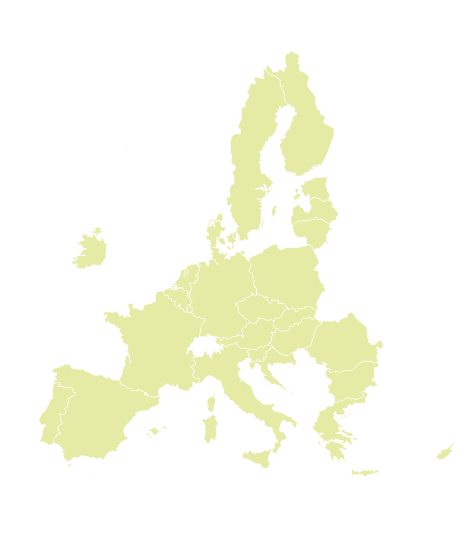
Map of Europe — average farmer age

Current average age

Ø 0 Years

Farmers under
40 years

Of current farmers

0 % Under 40

Share of women within these 12% of farmers under 40.

30 farmer figures — only one is female

Among young farmers

1 in 30 is female
We Did the Research. 
Here is what we found.

Farming is not a single experience. It represents a multitude of lived realities. Gender, race, age, class. sexual diversity are some of the intersecting dynamics that shape these experiences. The data and stories collected here are grounded in research and diverse, lived experiences of farmers across Europe, and beyond. 

Do you want to Hear the Full Story?

Farming needs young people.

Major CAP subsidies are paid on the basis of farm size. This leads to problems such as uneven distribution of funding that prioritises larger and wealthier farms. Another problem is that the subsidies favour intensification – larger monocultures, heavier input use, and more intensive livestock systems – instead of rewarding biodiversity, landscape stewardship.

% of beneficiaries Share of farming subsidies in 2024 Top 20% The remaining 80%

But is CAP support really that important for attracting farmers?

Our research shows, CAP is a main driver for enableing young farmers. Especially, if you have not inherited your farm (which most women don't). We simply cannot afford to miss out on the chance to enable more women to persue a career in farming. But currently, we do.
Farming needs young people.

The cost of failing to attract young farmers.

But is CAP support really that important for attracting farmers?

Our research shows, CAP is a main driver for enableing young farmers. Especially, if you have not inherited your farm (which most women don't). We simply cannot afford to miss out on the chance to enable more women to persue a career in farming. But currently, we do.
Here are some strategies to change this:

We are curently working on this section.

Stronger participation of young farmers in agricultural policy decision-making.

Institutional spaces for youth within farmers’ organisations and policy bodies.
Inclusion of young farmers and new entrants in CAP strategic planning processes.

Systems that we need:

Financial Support
for Start-Ups

Strategies for making
training universally accessible

A better future is possible. But…

Addressing equitable generational renewal can only be addressed by also addressing issues such as access to land (INSERT HYPERLINK), income…

PLACEHOLDER

THEMATIC ENTRY POINT

3

Resource Library

Quick Access to all Resources

No resources match your search.

Intro to Agroecology:

Peasant agroecology is a way of life that supports life-enriching systems, while opposing life-alienating systems.
Ecologically, it works together with nature and not against it. It cherishes synergies between living beings and prioritizes traditional farmer knowledge and participatory, transgenerational, and experiential learning processes.

Economically it bases its principles on forms of economy that are truly beneficial for communities: solidarity, circular, regional, within ecological boundaries. Politically it places the small-scale food producers rights as a priority on the agenda and we form a movement towards equality and social justice for all people worldwide

Source 
www.eurovia.org/wp-content/uploads/2022/04/Agroecology_EN.pdf

Dr Jessica Duncan
Rural Sociology Group, Wageningen University.
Hollandseweg 1, 6706 KN Wageningen, The Netherlands.
jessica.duncan (a) wur.nl

This project has received funding from the European Union’s Horizon Europe research and innovation programme under grant agreement:
101084561 – SWIFT- HORIZON-CL6-2022-COMMUNITIES-01

Check out our website here https://swiftproject.eu